The Future of Outsourcing CAD & BIM Services in the Modern Era:
Posted on : Dec 11, 2025
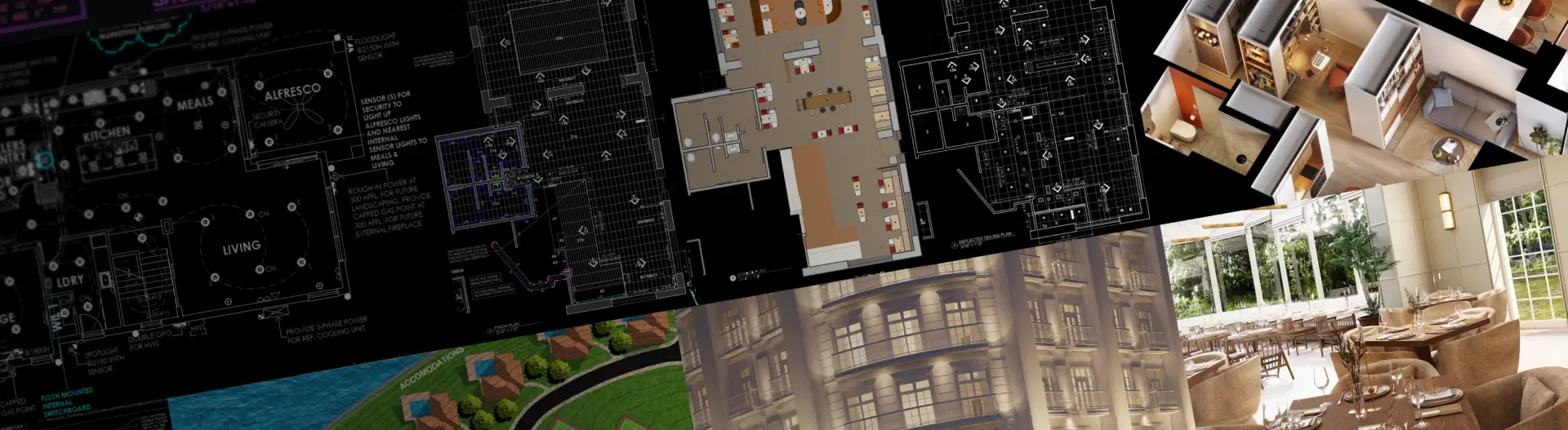
The Architecture, Engineering, and Construction (AEC) industry is undergoing a profound digital transformation. The days of relying solely on flat 2D blueprints created through basic CAD Outsourcing are rapidly fading, replaced by the data-rich, collaborative, and life-cycle-driven methodology of Building Information Modeling (BIM).

In this modern era, where BIM Services are becoming mandatory for public works and large private projects globally, the model for accessing high-level digital expertise is shifting. For architects, engineers, and developers, Outsourcing cad works and BIM Services is no longer a cost-arbitrage tactic; it is a strategic necessity for maintaining innovation, efficiency, and competitiveness.
The future of Outsourcing Architectural Services is centered on three core principles: the deep integration of AI, the transition from basic 3D models to data-rich Digital Twins, and the mastery of advanced digital construction workflows. This guide explores how embracing expert CAD Outsourcing and Revit Services partners will define project success in the coming decade.
I. The Shift from CAD Outsourcing to BIM Services Mastery
The fundamental difference between CAD and BIM reflects the industry’s digital maturity. CAD produces digital drawings; BIM produces intelligent, data-rich digital models. Modern Outsourcing cad Services are defined by their proficiency in this transition.
1. The Revit Imperative and Data Integrity
Autodesk Revit is the industry-standard platform for BIM, making Revit Services the cornerstone of most outsourcing partnerships. However, simple 3D modeling in Revit is not enough; the value lies in data integrity.
- Intelligent Modeling: Expert Outsourcing cad works teams focus on creating models where every element—a wall, a window, an HVAC unit—is a “smart” object loaded with non-geometric data (manufacturer, fire rating, cost, maintenance schedule).
- Revit Family Creation: A core high-value service is the creation of complex, parametric, and data-rich Revit Services families. These are critical for accurate Quantity Take-Offs (QTO), scheduling, and facility management, a tedious task that is highly effective when managed by specialist external teams.
2. Beyond 3D: 4D, 5D, and 6D BIM
The true power of BIM Services comes from leveraging model data beyond simple geometry. Modern outsourcing partners are equipped to support this multi-dimensional analysis.
- 4D (Scheduling): Linking model components to construction scheduling data to simulate the building process over time, allowing project managers to identify logistical clashes and optimize sequences.
- 5D (Cost Estimation): Automatically extracting material quantities and linking them to cost data for real-time budgeting, ensuring that design changes instantly update the project budget.
- 6D (Sustainability & Facility Management): Embedding data for energy performance analysis and ongoing operations and maintenance (O&M), supporting the creation of Digital Twins for the entire lifecycle of the building.
By delegating this data-intensive work to specialized Outsourcing Architectural Services providers, AEC firms maintain razor-sharp control over project timelines and budgets without the fixed overheads.
II. Strategic Advantages of Outsourcing in the Modern AEC Landscape
The choice to Outsource BIM Services is driven by core strategic needs that cannot be efficiently met by traditional in-house models.
3. Financial Agility: Conversion of Fixed to Variable Costs
The cost of maintaining a high-level BIM team—salaries, constant training, expensive software licenses (Revit, Navisworks), and powerful computing infrastructure—is a significant fixed overhead.
- Elastic Workforce: CAD Outsourcing eliminates this burden. Firms pay only for the Revit Services they use, when they use them. This converts fixed overheads into predictable, project-based variable costs.
- Instant Scalability: When a firm lands a massive new project, it can instantly scale its team from two to twenty modelers via the outsourcing partner. Once the peak load is past, the capacity scales back down, providing flexibility unmatched by internal hiring. This is the cornerstone of effective Outsourcing cad Services.
4. Specialization: Clash Detection and Coordination
Clashes—when two systems (like an HVAC duct and a structural beam) occupy the same space—are the number one cause of costly rework and delays on construction sites. Clash detection is a meticulous, complex task ideal for outsourcing.
- Proactive Clash Resolution: Dedicated BIM Services teams specialize in aggregating architectural, structural, and MEP models, running systematic clash detection using tools like Navisworks, and generating concise, actionable reports for the internal design team.
- Risk Mitigation: By resolving clashes virtually before construction begins, Outsourcing Architectural Services actively reduces project risk, saving thousands, sometimes millions, in on-site rework costs.
5. Bridging the Digital Twin Gap
The most exciting frontier in modern construction is the Digital Twin—a dynamic, real-time virtual replica of a physical asset. This requires combining reality capture with data-rich BIM.
- Scan-to-BIM Expertise: Outsourcing partners are experts in Scan-to-BIM, the process of converting dense Point Cloud data (captured by LiDAR scanners on existing buildings) into accurate, intelligent Revit Services models. This is essential for renovations, facility management, and creating the foundation of a Digital Twin.
- O&M Data Integration: The outsourced team ensures the model is built to a high Level of Development (LOD) and includes the necessary 6D BIM data to support facility operations long after construction handover.
III. The AI Revolution and the Future of Outsourcing Cad Works
AI is no longer just a trend; it is becoming an integrated component of CAD Outsourcing workflows, pushing service providers to deliver unprecedented levels of efficiency and value.

6. AI-Driven Automation and Quality Control
Many traditionally outsourced tasks—such as creating 2D Services documentation from 3D models, generating schedules, and performing code compliance checks—are now being automated by AI.
- Shift to High-Value Output: The future of Outsourcing cad works is the shift from manual drafting to intelligent automation management. The human modeler becomes the BIM Manager, leveraging AI tools to automate repetitive tasks while focusing their expertise on complex modeling, project coordination, and creative problem-solving.
- Enhanced Quality Assurance (QA): AI algorithms can instantly audit a Revit Services model for inconsistencies, adherence to BIM Execution Plans (BEPs), and common errors more thoroughly than a human can. This raises the floor of quality across all BIM Services deliverables.
7. Generative Design Exploration
For conceptual and schematic design phases, AI-driven Generative Design is set to redefine design exploration.
- Parameter-Based Design: Architects can outsource the task of running complex generative design simulations. They input high-level constraints (e.g., maximum daylight exposure, minimum material use, specific zoning setbacks), and the AI generates hundreds of validated design options. The outsourced Outsourcing Architectural Services team then curates and refines the most promising options for the client. This dramatically accelerates the conceptual phase.
8. The Global Hybrid Team Model
The most successful AEC firms will operate with a seamless, hybrid team structure.
- On-Shore Strategy, Off-Shore Execution: The internal team focuses on high-level design, client communication, and local regulatory adherence. The CAD Outsourcing partner handles the complex, resource-intensive, and data-driven modeling and coordination tasks. Cloud-based Common Data Environments (CDEs) ensure real-time collaboration, effectively dissolving geographical boundaries.
Conclusion: The Strategic Necessity of Intelligent Outsourcing
The modern construction and design industry demands efficiency, accuracy, and agility that basic in-house CAD Outsourcing models simply cannot sustain. The convergence of BIM, Digital Twins, and AI has created a new standard where specialized Outsource BIM Services are not just supplementary resources, but essential strategic partners.
The future of Outsourcing CAD & BIM Services is one defined by technological leadership. The primary mandate for architectural and construction firms is to embrace digitization, move beyond basic 2D drawing, and master the data-driven world of BIM and Digital Twins.
The path to achieving this without massive internal investment and upheaval is through a strategic partnership. By leveraging expert Outsourcing CAD Works firms, companies gain the elastic scalability, advanced Revit Services expertise, and technological integration (AI, Digital Twin) needed to deliver complex, compliant, and cost-efficient projects. In the modern era, Outsourcing Architectural Services is not a way to delegate drafting—it is the smart way to acquire the future of digital construction.
By choosing an expert provider of Outsourcing cad works and Revit Services, AEC firms gain:
- Financial Flexibility: Converting fixed overheads into variable, project-based costs.
- Technical Excellence: Guaranteed expertise in BIM Services, clash detection, and Scan-to-BIM.
- Future-Proofing: Immediate access to AI tools and Digital Twin workflows.
In this competitive era, the future of Outsourcing Architectural Services is clear: it’s intelligent, scalable, and indispensable for delivering the faster, more accurate, and more sustainable buildings the modern world requires.
FAQs
Q1: What is the main difference between basic CAD Outsourcing and modern BIM Services outsourcing?
A1: CAD Outsourcing traditionally delivered 2D digital drawings. Modern BIM Services outsourcing delivers intelligent, data-rich 3D models (using tools like Revit) where every component is linked to cost, scheduling, and facility management data, supporting the entire building lifecycle.
Q2: How does outsourcing BIM Services help reduce construction costs?
A2: Outsourced BIM Services teams specialize in Clash Detection and coordination before construction begins. By identifying and resolving conflicts (e.g., HVAC vs. structure) in the model, they prevent costly on-site rework, delays, and change orders.
Q3: What are “Revit Services” and why are they important for outsourcing?
A3: Revit Services refers to specialized modeling and documentation work performed within the Autodesk Revit software. It is important because Revit is the industry standard for BIM, and outsourced teams specialize in high-value tasks like creating complex, data-rich Revit Families and performing Scan-to-BIM conversions.
Q4: How does AI affect the future of Outsourcing cad works?
A4: AI automates repetitive tasks like documentation and code checking, shifting the focus of Outsourcing cad works from manual drafting to managing automation. The human role is elevated to guiding AI tools, curating generative designs, and focusing on complex coordination tasks.
Q5: What is a Digital Twin, and how do Outsourcing Architectural Services contribute to it?
A5: A Digital Twin is a dynamic, real-time virtual replica of a physical building used for long-term operations and maintenance (O&M). Outsourcing Architectural Services contribute by performing accurate Scan-to-BIM modeling and ensuring the final model is enriched with the 6D BIM data required to power the Digital Twin.
Q6: What is the “financial agility” benefit of Outsourcing cad Services?
A6: Financial agility is the ability to convert fixed costs (salaries, software licenses, hardware) into variable, project-based costs. Outsourcing cad Services allows firms to instantly scale up for large projects or scale down during lulls without the risk or expense of hiring and maintaining a permanent, large in-house BIM team.
Related Blogs
Art assets in different styles like 2D art for interactive applications, Games, and UI. We are having more than 15 years of experience